

We live in a world in which nonprofit funding often feels limited. And when we operate with a scarcity mindset, we can sometimes make decisions that can negatively impact our organizations now and in the future. Here’s how I have seen this play out.
What Mission Drift Looks Like
A private foundation issues a request for proposals, or an individual donor wants to make a gift to your organization, but the initiative they want to fund is a little outside of your wheelhouse. So you design a project or a program that aligns with the donor’s aims, then reverse-engineer your way into explaining how it aligns with your organization’s mission and strategic priorities.
That’s okay, you tell yourself, because we need the money. Fast forward a few years, and your organization now has an entire division of work that was not part of your strategic plan then and is causing organizational headaches now.
The Risk of a One-Degree Mission Shift
The risk of program planning out of a scarcity mindset is that we risk mission drift. I often think about an illustration James Clear gives in his book Atomic Habits:
When we repeat 1% errors, day after day, by replicating poor decisions, duplicating tiny mistakes, and rationalizing little excuses, our small choices compound into toxic results….Imagine you are flying from Los Angeles to New York City. If a pilot leaving from LAX adjusts the heading just 3.5 degrees south, you will land in Washington, D.C., instead of New York.
A one-degree shift in your work may not seem like much at first. But after a few years of pouring your resources into a program that’s a little bit off mission, you may be doing work that you never intended to do.
How to Avoid Mission Drift
So, how do you avoid mission drift when pursuing program funding? Here are a few tips to keep you mission-driven:
- Review your organization’s mission and strategic priorities. Remain anchored to what you have prayerfully discerned as the work God is calling you to do.
- Check for alignment between the funder’s aims and your mission and strategic priorities. Recognize that misalignment happens, and it is not the end of the world if you need to pass on a funding opportunity to stay faithful to your mission.
- Have an abundance mentality. Even though funding seems scarce and the number of donors has dropped, the amount of money given has been trending upward. And remember that God is our ultimate provider, who meets our needs sometimes in the most miraculous ways.
Help for Avoiding Mission Drift
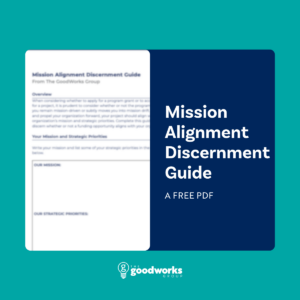
If you have a funding opportunity that requires you to engage in a new project or program, you may want to determine how well your ideas and the funder’s goals align with your organization’s mission and strategic priorities. This FREE download can help. Get this three-page Mission Alignment Discernment Guide when you subscribe to our newsletter.